 The Temple
Temple · Contemplations
Pǔ — The Uncarved
What am I carving merely by looking?
There is an old Daoist image: 樸 — pǔ — the uncarved block.
At first it seems easy enough to understand. Before the wood is carved, it could become anything.
A bowl.
A figure.
A tool.
A dragon.
But perhaps that already goes too far.
The moment I look at the block and imagine what it could become, something has already happened. I have divided the uncarved into possibilities. The bowl exists as possibility because my mind knows bowls. The dragon appears because I know dragons.
The block itself has said nothing.
Figure 1 · the block · and the four things nobody asked it about
A block of wood. It is not obviously waiting for anything.
Possibilities imagined 0 · Possibilities the block proposed 0 · Source of every one of them you
And suddenly pǔ becomes much stranger.
Perhaps the uncarved is not infinite because it contains every imaginable thing.
Perhaps it is uncarved because it has not yet been asked to become one.
iThe Knife of Attention
Attention reveals.
But attention also selects.
The moment I notice the bird, there is bird and not-bird.
The moment I name the tree, there is tree and everything surrounding the tree.
The moment I say this, an enormous not-this silently appears with it.
Figure 2 · one cut · and the remainder it creates
Nothing has been noticed. Nothing is in the background, because nothing is yet in the foreground.
A field of things, none of which has been asked to be anything in particular.
Cuts made 0 · Things created by noticing 0 · Remainder created alongside each exactly one, and it is enormous
We usually investigate what has entered the foreground.
But what happened to everything that did not?
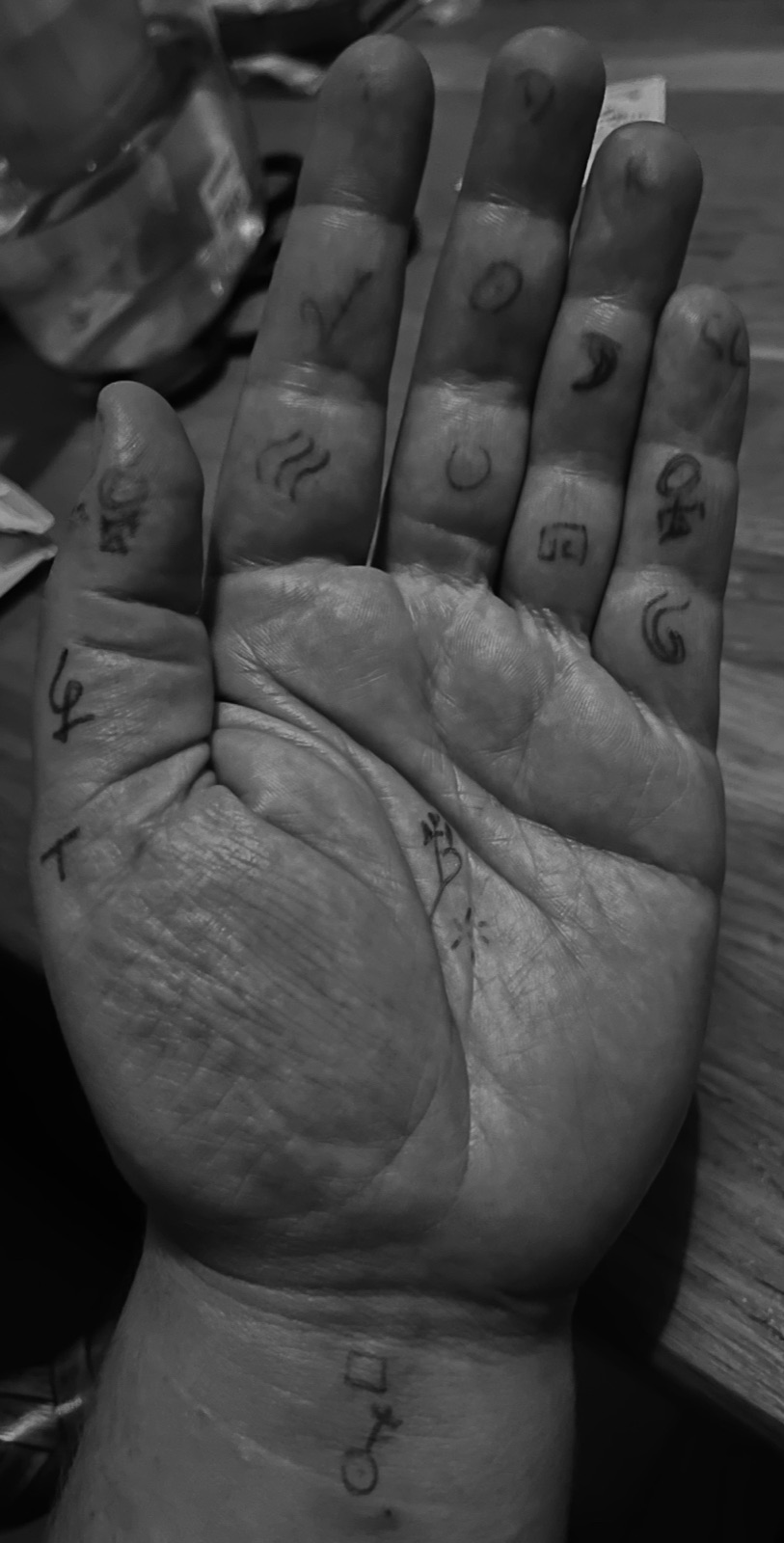
There is an interesting resonance here with the double-slit experiment. Quantum mechanics does not establish that human consciousness magically creates reality simply by looking at it. What it does show, more carefully, is already strange enough: the way a physical system is measured matters to what can subsequently be observed about it.
The experimental arrangement is not irrelevant to the phenomenon revealed.
That is enough for contemplation.
Figure 3 · two arrangements · one system
The apparatus is set up and nothing has been decided about how to ask.
Arrangements tried 0 · Aspects made available one per arrangement · Reality invented by looking 0 · Neutral arrangements found none
Because something analogous happens continuously in ordinary experience.
Figure 3b · four ordinary instruments
Four instruments, all of them in constant use, none of them experienced as an instrument.
Instruments inspected 0 · Instruments that can be set aside 0 · Instruments that can be noticed all four
The measuring instrument does not have to invent reality for measurement to participate in determining which aspect of reality becomes available to us.
iiWhat Is Not Looked At
And perhaps this is the more interesting part.
Not what appears.
What doesn't.
Every act of attention has an outside.
I cannot place everything simultaneously into the foreground. The very existence of a foreground implies a background.
Figure 4 · one photograph · four foregrounds, taken one at a time
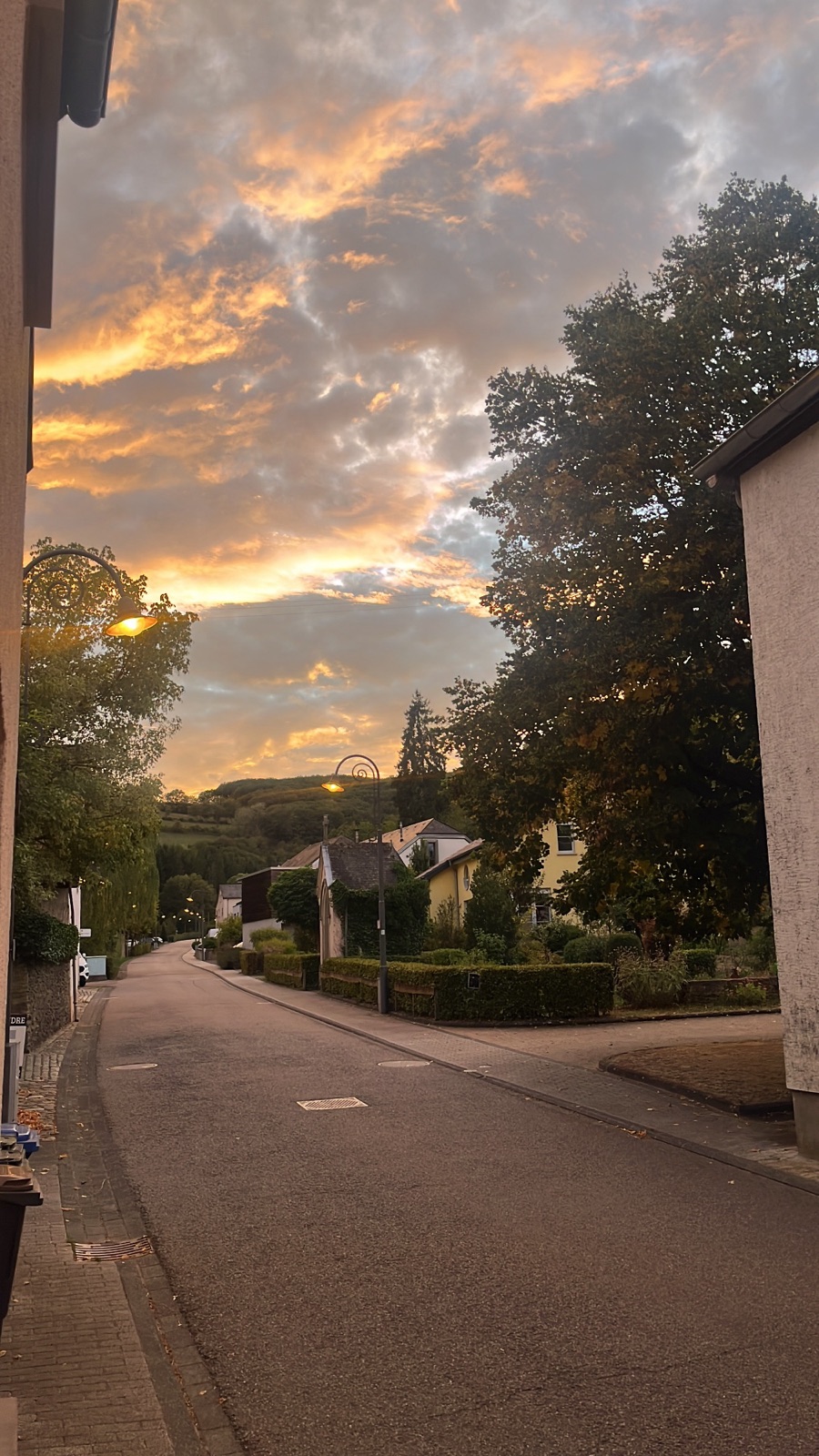
A street, at the hour when the light does most of the work. Nothing in it has been put in front of anything else yet.
Foregrounds chosen 0 · Maximum simultaneous foregrounds 1 · Photograph altered 0 · Everything outside the frame still there
So there is a peculiar kind of knowing that arrives when I notice the limits of knowing.
Not:
Now I know what is hidden.
But:
I know that something remains outside the frame.
I do not need to fill that space with angels, particles, dimensions, spirits, psychological projections or theories.
I can leave it uncarved.
Figure 5 · the space · and six perfectly respectable things to put in it
currently: a space
An area of not-knowing, currently unfurnished.
Explanations available six · Explanations required 0 · Space remaining all of it
That may be the difficult practice.
Because mind loves finding the answer.
And sometimes wisdom may consist in recognizing the precise place where the answer would become another cut in the wood.
iiiThe Uncarved Moment
Perhaps every moment arrives somewhat like pǔ.
Before:
Figure 6 · one moment · and the six things that arrive shortly afterwards
Before anything is decided about it, there is simply: this.
Layers added 0 · Moments altered 0 · Layers removable yes — with attention
This is good.
This is bad.
This means something.
This confirms what I believed.
This should not be happening.
I know what this is.
There is simply:
this.
Then consciousness meets it.
attention moves → distinctions arise → meaning accumulates → action follows
and the next moment inherits the carving
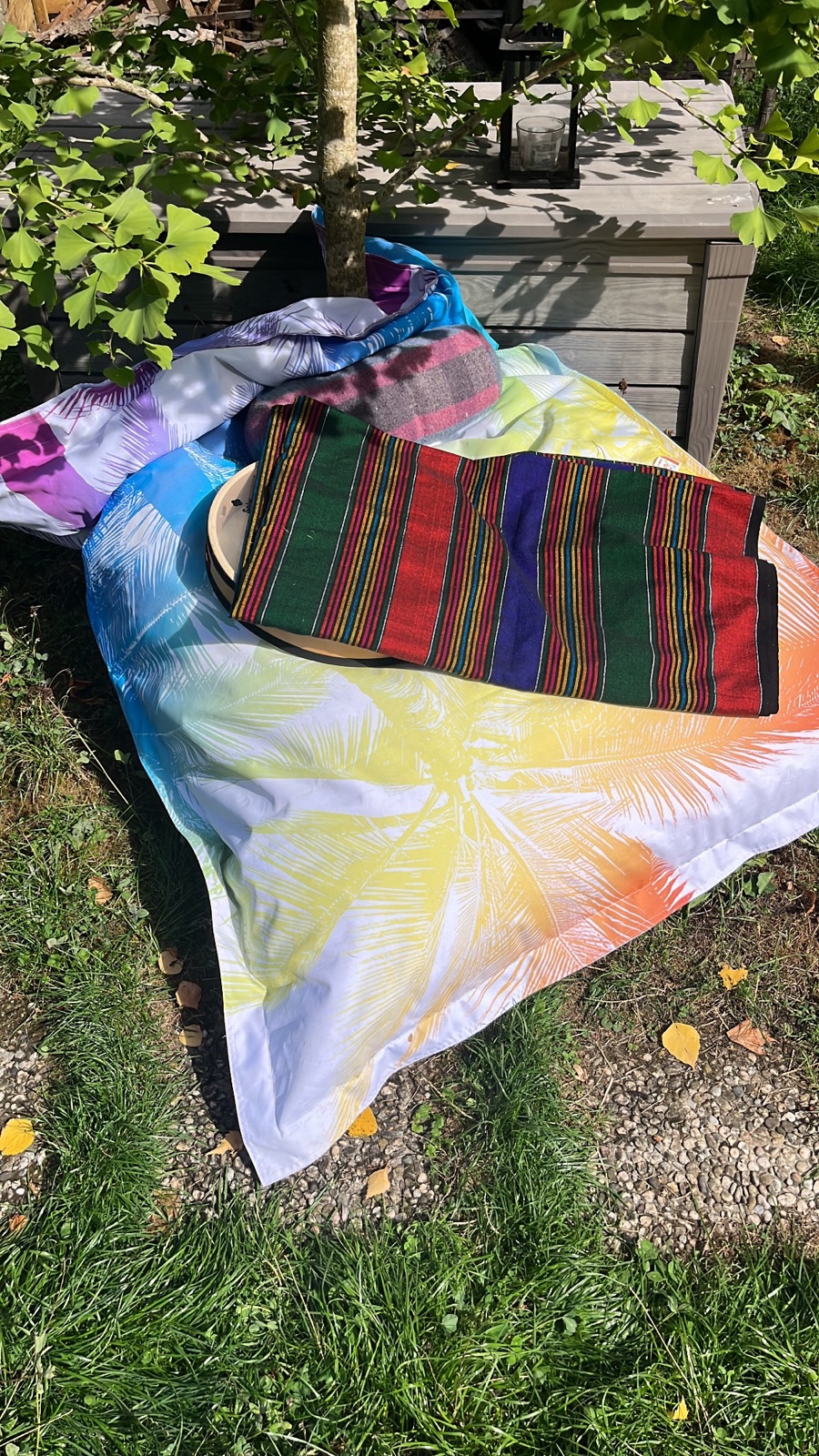
There is nothing necessarily wrong with this. Without distinction there would be no cup, no language, no road, no Minecraft house and probably no tea.
Carving is creation.
Figure 7 · things that exist because somebody cut the wood
Nothing here needed to be improved. Everything here needed to be distinguished.
Five ordinary things. Every one of them is a cut somebody made, and kept.
Things lost when distinction is removed 0 · Including the tea not yet · Recommended no
The interesting question is whether I remember that I am carving.
Perhaps that is why the greatest wisdom can appear foolish.
It has learned enough about the knife to occasionally put it down.
And before asking,
“What is this?”
it leaves one small silence for another question:
Figure 8 · the silence · which has to be left, not filled
“What is this?”
“What have I made it by looking at it this way?”
Two questions. One of them only arrives if room is made for it.
Time added by the silence about two seconds · Questions prevented 0 · Questions made possible 0
And behind even that question remains something wonderfully inaccessible.
Figure 9 · what remains · and is not going to be explained here
Four things, none of which is a secret, and none of which is an answer.
Explanations offered 0 · Explanations that improved anything 0 · Status uncarved
Not an answer.
Not a secret.
Just the uncarved.
And before the next thing you look at today:
“What have I made it by looking at it this way?”
The Temple has no answer department. On this page it has been unusually careful not to build one.
樸Pǔ · Ano'he